
How to Buy a Used Injection Mold: What to Inspect Before You Pay
Table of Contents
A broker offers a 4-cavity connector mold at 35 percent of the new-tool price. The listing quietly reads 850,000 shots against a 1,000,000-shot rating. The parting line carries a 0.3 mm flash witness, so the shut-offs need a rebuild at 15 to 25 percent of new cost before the tool makes a saleable part. The discount was never a discount. This guide sets out the numbers that decide whether a used mold is a deal or a bill.
The scope is buyer-side: where secondhand steel comes from, what to measure during a walk-through, how to price the refurbishment ledger, and when a new tool wins on math.
The Snapshot
- Used molds list at 25 to 50 percent of a new tool. Typical listings read 80 to 100 percent of the rated shot count already consumed, so the discount tracks the wear.
- Wear is non-linear above 60 to 70 percent of rated life. A P20 cavity band of 300k to 800k shots and an H13 band of 500k to 1.5M define the refurb threshold.
- One walk-through answers most questions. 20 to 40 open-shut cycles, a 0.05 to 0.1 mm parting-line overlap check, heat-check depth of 0.05 to 0.2 mm.
- Refurbishment runs 4 to 8 weeks against 8 to 14 weeks for a new tool. Used only wins while the repair ledger stays under roughly half of new cost.
Where Cheap Used Molds Come From
Almost every used mold on the market left a production line for one of four reasons, and the reason matters more than the asking price. Line closure and program cancellation release healthy tools from plants reconfiguring their product mix. These are the best steel in the pool because the mold died with the program, not with the cavities.
OEM stock auctions mix two very different assets in one lot. A commissioning tool may carry 500 to 5,000 shots and read like new, while an end-of-program mold leaves with 500,000 shots or more on the counter. The photos look identical on the listing page.
Broker lots are a third category. A broker buying a plant liquidation sometimes sells by weight of steel rather than by part geometry, and the buyer inherits the guesswork. Mold maker scrap and rebuild stock rounds out the pool: tools that failed an internal acceptance at the builder and were never put into a paying program.
The typical listing across all four channels reads 80 to 100 percent of the rated shots consumed, which is exactly what the injection mold buying checklist warns about when it prices a tool by its asset register instead of its sticker. Ask for the origin category in writing before you schedule a visit. A seller who cannot name the reason for sale is selling risk, not steel.
The Shot Count Problem
A tool rated at 1,000,000 shots sold at 300,000 cycles is a different asset than the same rating sold at 900,000. The rating is only a promise about steel, and each steel answers differently. P20 pre-hardened cavities typically carry a 300k to 800k shot life. H13 through-hardened tooling runs a 500k to 1.5M band. 420 and S136 stainless polish faces last 800k to 2M shots between re-polishes.
Wear does not accumulate in a straight line. Above roughly 60 to 70 percent of rated life, heat-check cracking and cavity erosion compound: each thermal cycle opens hairline cracks a little deeper, and glass-filled resins sand the shut-off edges faster as the surface roughens. A P20 connector mold at 85 percent of life is closer to the end of its useful window than a linear read suggests, and thin-wall optical steels fail early for the same reason.
The stated count needs corroboration. Press cycle counters, maintenance logs and the date stamps on retained sample shots all triangulate it. Gate wear is a quiet witness: an entry gate that has lost its original 0.5 mm radius to erosion has probably cycled far more than the listing claims. Count witness marks per cavity, not just the number on the sheet.
Then convert the count into a purchase decision. Subtract the corroborated shots from the steel-band life, price the refurbishment ledger against the remaining window, and divide by your annual volume. A tool with 150,000 shots left and 300,000 shots of demand per year is not cheap. It is a 6-month rental you paid for up front.
The Walk-Through Inspection
Never buy secondhand steel from photographs. Book the visit with a dial indicator, feeler gauges and a hardness tester if the seller allows one, then run the sequence below on site. The whole pass takes 2 to 4 hours on a mold under 1,500 kg.
Cycle the tool with the seller: open and shut 20 to 40 times on a die car, and watch rather than listen. Watch for guide-pin scoring, slides dragging past 0.02 to 0.05 mm of free play, and ejector plates sticking on return. Those faults announce themselves during the first 10 cycles. After that they hide once the metal is warm and the grease has moved.
Read the parting line next. Steel-to-steel contact should show an even witness band with overlap in the 0.05 to 0.1 mm range around the cavities. Localized bright wear, a band fading out over 20 mm, or a flash witness thicker than 0.05 mm on retained parts means the shut-offs need welding and re-cutting, not cleaning. Tap the shut-off edges with a pick: a cracked or shimmed insert answers with a different ring than solid steel.
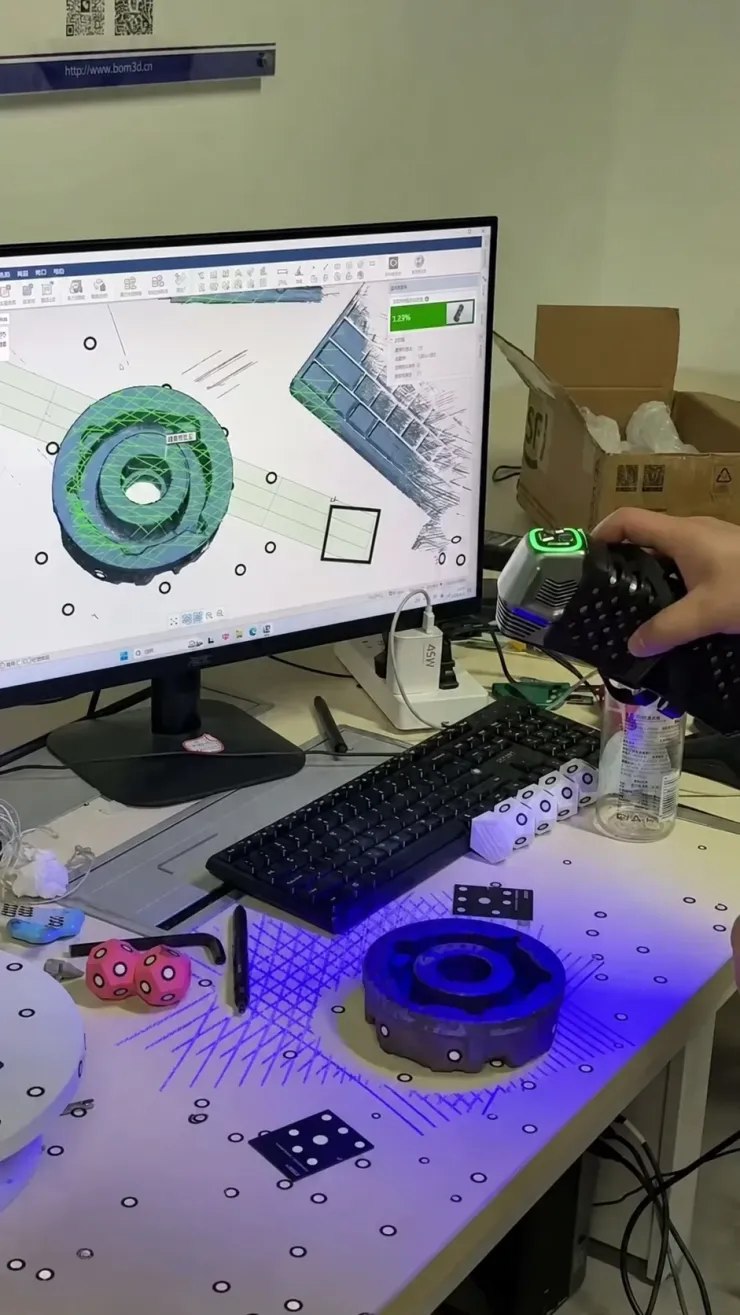
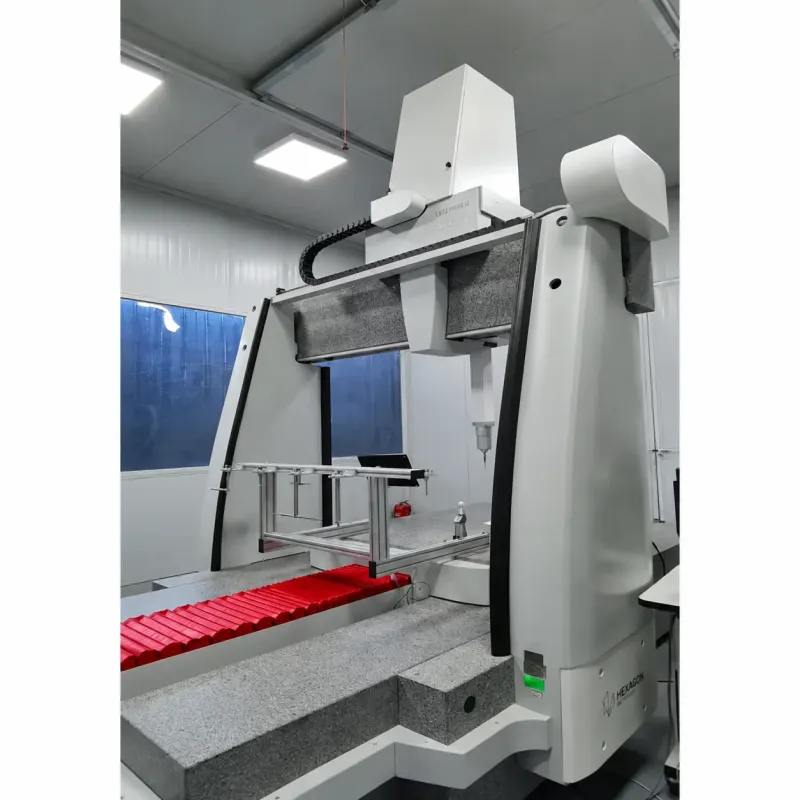
Then measure the cavities against the print. Pick five tolerance-bearing features, including one cosmetic datum, and check each with a 0.05 to 0.1 mm acceptance band. Ask for the CMM report from the last production run and compare its numbers with your gauge readings. A mold that ran out-of-print and was chased with gate and cooling tweaks will not return to nominal on your press.
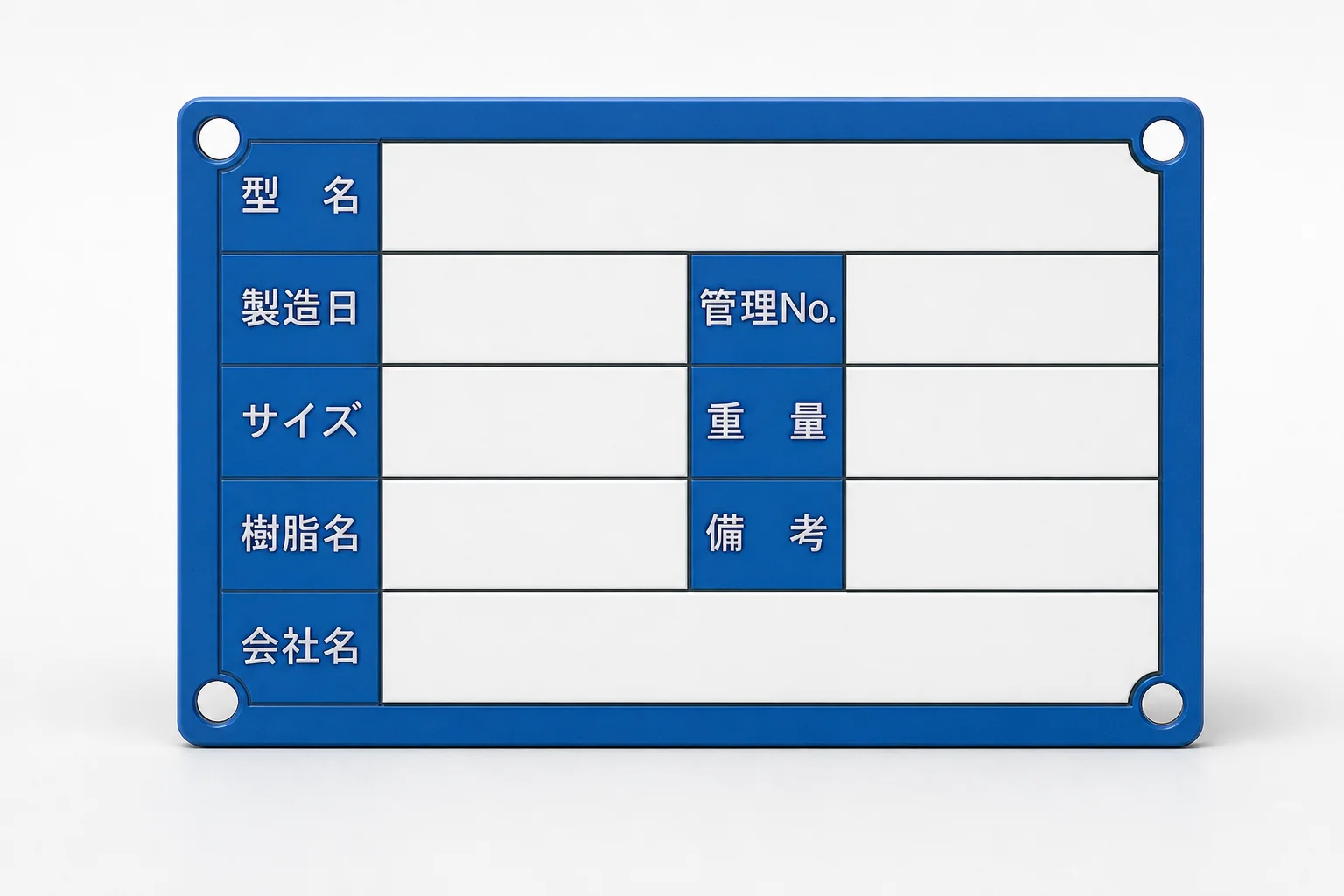
Finish with the structural items. Check mold base flatness on the clamping faces, deflection marks near the sprue, the clamp and ejector bolt holes, lifting-eye threads, and the nameplate against the real cavity count. A nameplate claiming 8 cavities over a core with 4 holes is not a paperwork error. It predicts every other answer you will get.
Hot Runner and Ejection Checks
The hot runner is the highest-leverage sub-assembly in a used mold. It is the most expensive item to replace and the easiest to fake as working. Ask for the controller and heat the manifold through a full soak of 45 to 90 minutes, rather than accepting a quick plug-in demo.
Check thermocouple continuity zone by zone. A healthy circuit reads 10 to 40 ohm, so an open or drifting zone betrays a damaged wire or a burned heater band. Confirm heater wattage against the manifold nameplate. Then inspect the tip faces for two classic killers: a leak that welded plastic to the shut-off face, and drool that cold-flowed down the tip. Both mean a rebuild at 3,000 to 10,000 USD per system, quoted before you sign.
Color history belongs in this part of the report. A manifold that ran black glass-filled nylon for 500,000 shots purges poorly on natural resin for weeks. A galled valve pin shows itself in the actuator cycle test. The maintenance notes in the hot runner maintenance checks apply unchanged to used steel, so run them as acceptance criteria in the contract.
Ejection gets the same depth of attention. Count ejector pins and sleeves. Polished, dished heads mean pins that have been re-topped, and a pin running 0.05 mm below the cavity surface prints a witness your customer will see. Work the stripper plate by hand where access allows, and check the return mechanism for the scoring and play you read on the parting line.
Ejector pins and sleeves are standard components replaceable in 3 to 7 days at IATF 16949 component shops, so worn pins are a costing line, not a deal-breaker. A cracked ejector plate is different: it is a fabrication quote and a lead-time hit.
The Hidden-Cost Ledger
The purchase price is the entry fee. The ledger below prices what you actually pay. Percentages run against a comparable new tool; fixed lines are typical USD bands for a mid-size multi-cavity mold.
| Ledger line | Typical cost | Trigger found at inspection |
|---|---|---|
| Mold base replacement | 15 to 40 percent of new cost | Base flatness out, bolt holes wallowed, shimmed inserts |
| New cavity steel with pattern | 40 to 70 percent of new cost | Cavity 0.1 mm over print, heavy heat-check density |
| Hot-runner rebuild | 3,000 to 10,000 USD | Open thermocouple zone, tip leak, galled valve pin |
| Guide-bush and pin set | 500 to 2,500 USD | Scoring, slide drag over 0.05 mm |
| Water-line cleaning and plugs | 200 to 800 USD | Scale choking an 8 to 10 mm line, blocked baffles |
| Re-polish or re-texture | 300 to 1,500 USD per face | SPI finish lost, texture boundary washed out |
| Weld repair of one cracked insert | 500 to 2,000 USD plus re-try | Pick test or dye penetrant crack |
| Re-dimension and trial shots | 2 to 10 shots plus press time | Any steel cut, weld or shim during refurb |
| Shipping and rigging | Sized for an 800 to 3,000 kg mold | Every deal, distance-dependent |
| Teardown inspection | 1 to 2 shop days | Strip-down beyond the walk-through |
← swipe to scroll →
Table note: bands are typical industry ranges for a mid-size multi-cavity mold, expressed against a comparable new-tool price. Get fixed quotes for each open line before you total the ledger.
Two ledger lines can flip the whole deal. New cavity steel with the pattern runs 40 to 70 percent of new cost. A heavily heat-checked tool plus the purchase price then exceeds a fresh build. A part change is the hidden line most buyers miss. New drawings, gate re-layout or a resin change pull the tool back to the design table, and that is mold design and DFM work, not repair.
Sum the ledger at 100 percent, not at your optimism. If purchase price plus full refurb lands above 65 to 70 percent of a new tool, the used route has stopped being a discount. It is a schedule shortcut.
Matching the Mold to Your Press
A cheap mold that does not fit your press is an expensive mold. Run the fit list before the inspection visit, because every mismatch either kills the deal or adds a machining line to the ledger.
Start with clamp tonnage. Compute the projected area of part plus runner at 300 to 500 bar cavity pressure. Keep 20 to 30 percent margin against the design tonnage, as the clamp tonnage calculation guide sets out. A tool built for a 2,000 ton plant often flashes on your 1,300 ton press. Adding a cavity is never part of a used deal.
Then walk the geometry stack. Check daylight and shut height plus the ejection stroke. Check mold height against tie-bar clearance, and the bolt pattern against your platen grid of 100 to 200 mm. A sprue bushing needs a 6 to 12 mm taper match to your nozzle or a replacement bushing on the ledger. Hot-runner voltage and connector type must match your controller inventory. Robot interfaces and part-drop need a physical check, not an e-mail confirmation.
Finish with mass and machine side. A 2,400 kg mold in a plant with 1,000 kg hanger capacity is a crane problem you pay to solve at delivery. Check the runner-versus-shot ratio for your machine. A tool sized for a big press can under-plasticise on yours, and the cure is process development, not steel. The full sweep is the same compatibility check any mold maker runs at order stage. It reads the same whether the tool is new or ten years old.
Documents to Demand Before Payment
Paper is the cheapest part of a used mold deal and the one sellers protect most. Ask for seven documents in writing before any money moves. Treat a missing document as a priced ledger line, not a nuisance.
Original part and mold drawings come first. Without them, every future repair starts from a reverse-engineering quote measured in days of scanning and re-drawing. If the seller cannot produce the drawings, price that package into the deal before you sign.
Second, steel certificates for the cavity inserts: grade and hardness records that let you check the claimed P20, H13 or S136 against the shot count. A tool sold as H13 that verifies soft answers a 0.005 mm tolerance question with a bad one. Third, the PPAP or FAI file with the dimensional history from the last production period. A run chart drifting 0.03 mm toward one print limit tells you which cavity is tired.
Fourth, the maintenance and weld-repair log. A cavity welded three times for heat checking is a cavity the metallurgy is arguing with, and an undocumented repair is a crack you find after payment. Fifth, the last 100-part run chart or first-article inspection report. Sixth, a dated trial video of the tool running full cycle, with parts on camera. Seventh, the reason for sale in one signed sentence. Line closure, end of program or capacity change are all fine answers. Silence is the only bad one.
Used Versus New: The Deal Math
Used molds list at 25 to 50 percent of a comparable new tool, and that spread is the whole sales pitch. Build the comparison on three lines: total cost, remaining life and lead time.
Total cost is the purchase price plus the sealed refurb ledger from your inspection. Remaining life is the corroborated shot count subtracted from the steel band. Below roughly 45 percent of rated life consumed, refurb math usually keeps the deal cheaper than new even at the top of the ledger. Above a 65 percent wear band, cavity replacement at 40 to 70 percent of new cost swallows the discount. The purchase then becomes a partial new tool with someone else's history attached.
Lead time decides the rest. A refurbishment and re-dimension runs 4 to 8 weeks against 8 to 14 weeks for a new build. If the gap between your launch date and the new-tool clock is under 4 weeks, the used route earns its risk premium. If it is not, buy new and buy clean paper.
Four situations make a used tool the wrong answer regardless of price. Tight-tolerance optical and medical parts, where cavity wear reads directly as a rejected lens. No drawings and no dimensional history, where every repair pays reverse-engineering rates. Automotive programs carrying a PPAP requirement, where the customer audits process history and the tool arrives with none. Class A cosmetic faces headed for plating, where heat-check cracks at 0.05 to 0.2 mm depth polish out and return within 50,000 shots. A hot runner with no service history joins the list fifth: rebuild it before you trust it, and price the rebuild as if the seller will not pay for it.
Contract Terms That Protect the Buyer
Inspect with your hands, then sign with your lawyer. Each clause below exists because a used mold deal has failed on that exact point.
Structure payment around proof. The strongest term is simple: the balance releases after your own trial shots on your own press, not after the seller's video. A no-shots-no-pay clause carries the idea one step further. If the tool cannot produce printable parts at its rated cycle in your plant inside an agreed window, the money returns. Where neither party will carry that risk alone, escrow splits it, holding the balance with an independent agent until the trial report is countersigned.
Insist on an on-site witness test before shipping, on your calendar, with your sample material. A mold that runs on the seller's dried resin can flash and short-shot on your 30 percent glass-filled lot in the first week. Put the acceptance numbers in the clause: the 0.05 to 0.1 mm cavity band you measured on the walk-through, the cycle time from the trial video, and the shot count stated in writing.
Settle the drawing question before payment. If the deal includes reverse-engineered drawings, say who owns them and whether the seller keeps a copy. A rebuild shop that re-measures your cavities on every future repair charges you for that ambiguity every single time.
The Safe Route
The buyers who lose money on secondhand steel buy a piece of metal. The buyers who win buy a part program, and the difference is a process, not luck.
Start with the register. The day the mold arrives it goes into an asset record with its verified shot count, steel grade, sealed refurb ledger, drawing set, and the name of the shop that knows its history. Registering bought tooling follows the same discipline the mold asset register guide lays out for owned molds. A used mold without a register is a used mold twice.
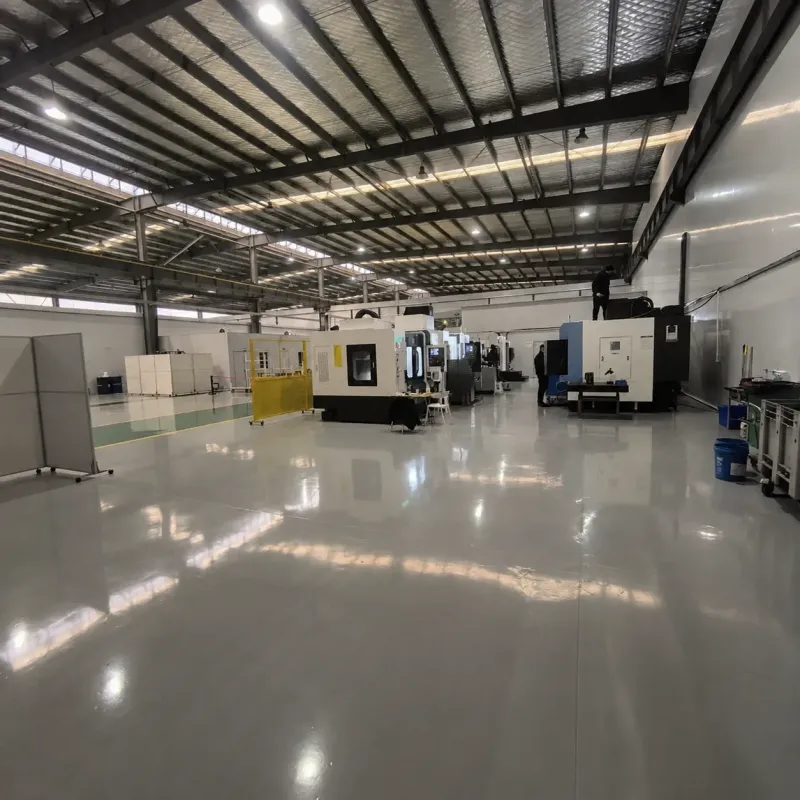
Then keep a rebuild partner on call before you need one. A shop working under an IATF 16949 quality system can re-dimension a worn cavity to plus or minus 0.005 mm, hold plus or minus 0.002 mm on the EDM and jig-grinding steps that rebuild a shut-off, and run replacement inserts to HRC 62 when the original steel came up soft. We rebuild tools like these, and standard components ship in 3 to 7 days, which keeps a refurb inside the 4 to 8 week window the deal math assumes. The molder you buy from, the broker and the plant that liquidated the line all answer better when you have your own shop on the phone.
Finally, set the spare-parts inventory from day one, not day ninety. Ejector pins, sleeves, one guide-pin and bushing set, heater bands and thermocouples for every hot-runner zone, and the sprue bushing. The wear list is finite and priced against the ledger you already sealed. A 3 to 7 day component lead is survivable. A 6 week fabrication is not.
The Bottom Line
A used injection mold is priced by its remaining steel, not its sticker. Corroborate the shot count against the band for its steel: 300k to 800k shots for P20, 500k to 1.5M for H13. Treat wear above the 60 to 70 percent life mark as accelerating. Then walk the tool yourself: 20 to 40 open-shut cycles, parting-line overlap inside the 0.05 to 0.1 mm window, heat-check depth measured in 0.05 to 0.2 mm, cavities gauged to 0.05 to 0.1 mm of print, and thermocouple zones reading 10 to 40 ohm.
Let the ledger decide. Purchase price plus a refurb bill running 15 to 70 percent of new cost has to land under the break-even band of roughly 45 to 65 percent life consumed, inside a 4 to 8 week schedule that beats the 8 to 14 weeks of a new build. Pay against your own trial shots, own the drawings, register the tool on arrival, and keep a rebuild partner on call under an IATF 16949 quality system, with tier-1 references that include TE, Amphenol, Luxshare and Dongshan.
The right used mold is the one whose history, wear and repair bill you can read before the wire moves. Everything on this checklist exists to make that reading possible. A seller who resists any single line is answering the question for you.
KEEP READING
Related Reading
How to Read a Mold Quote
The line items, steel callouts and exclusions hiding inside a new-tool quote.
Read articleArticle7 Signs a Mold Base Needs Replacement
Wear, deflection and fatigue marks that put a used mold base on the scrap list.
Read articleArticleHow to Run a Mold Trial
A trial protocol that turns 2 to 10 shots into a defensible buy or pass decision.
Read articleServiceMold Repair and Maintenance
IATF 16949 refurbishment, weld repair and re-dimensioning of used molds, with standard components in 3 to 7 days.
Read articleNEXT STEP
Ready to Start Your Mold?
Send us your element dimensions or part numbers — our team responds within 24 hours. Pricing and lead time come with the answer.

Written by
Ray ChanExport Brand Manager at DieStrike. Ray helps global importers, distributors and OEMs source factory-direct molds and mold parts.